
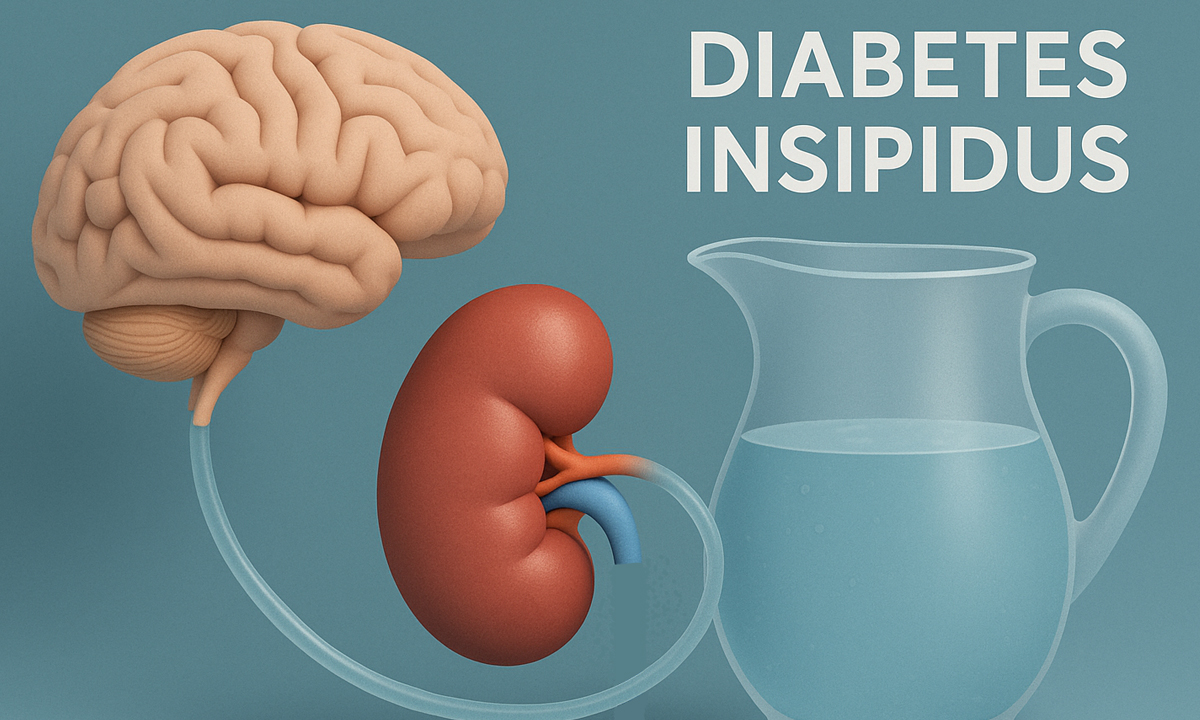
Diabetes Insipidus (DI) is a rare condition characterized by excessive thirst and the production of large volumes of dilute urine. Unlike diabetes mellitus, which involves high blood sugar, DI is related to the body’s inability to regulate water balance due to problems with the hormone vasopressin (also called antidiuretic hormone, or ADH). ADH is responsible for conserving water by instructing the kidneys to concentrate urine. When ADH is deficient or the kidneys fail to respond to it, excessive water is lost, leading to dehydration and persistent thirst.
There are two main types of DI: Central Diabetes Insipidus and Nephrogenic Diabetes Insipidus. Central DI occurs when the hypothalamus or pituitary gland fails to produce or release adequate ADH. This may be caused by head injury, brain infection, tumors, or genetic abnormalities. Nephrogenic DI results from the kidneys’ inability to respond properly to ADH, even when hormone levels are normal or elevated. This form may be inherited or caused by medications such as lithium, chronic kidney disease, or metabolic imbalances.
Symptoms commonly include extreme thirst (polydipsia), excessive urination (polyuria), dehydration, dry skin, irritability, poor sleep, and in children, failure to thrive. Infants with DI may show signs such as fever, vomiting, irritability, and poor feeding. If not promptly treated, severe dehydration and electrolyte imbalances can occur, leading to serious complications.
Diagnosis involves a combination of patient history, physical examination, urine tests, blood electrolytes, and specialized evaluations such as the water deprivation test, which helps distinguish between central and nephrogenic DI. Imaging studies may be used to assess the hypothalamus and pituitary gland in suspected central DI. Early diagnosis is crucial because untreated DI can be life-threatening due to dehydration.
Treatment differs depending on the type. Central DI is usually managed with desmopressin (DDAVP), a synthetic form of ADH that helps reduce urine output and maintain water balance. Nephrogenic DI is treated by addressing the underlying cause, such as adjusting medications or correcting electrolyte disturbances. Dietary modifications, including low-sodium intake and adequate hydration, can help reduce urine output. In some cases, diuretics like thiazides are used to improve symptoms paradoxically.
With proper treatment and monitoring, individuals with Diabetes Insipidus can lead normal, healthy lives. Regular follow-up is essential to ensure stable hydration, kidney health, and electrolyte balance, especially in children.